Sustainable Packaging: What Really Changes for Companies Producing and Handling Boxes
Sustainable packaging is everywhere in the conversation, often presented in alarmist terms: looming deadlines, new obligations, materials that supposedly need to be abandoned overnight. The reality for companies that manufacture or use cardboard boxes is simpler and more interesting: a transition is underway, from plastic to paper, and it can be managed through measurable technical choices without disrupting production. Let's look at what is really changing and where it makes sense to start.
The Plastic-to-Paper Transition: What's Happening?
Secondary packaging - the boxes used to transport products and deliver them to customers - has traditionally relied on cardboard: a recyclable material supported by a well-established collection infrastructure and with one of the highest recovery rates in Europe. Yet many "paper" packages still contain plastic components that almost no one notices: tapes, windows, laminates, and functional components.
The market is moving in a clear direction: simplification. Sustainable packaging is, first and foremost, simple packaging. Fewer materials within the same package, more recycled content, and a simpler end-of-life process. Large buyers are asking suppliers for recyclable packaging, consumers reward it on store shelves, and packaging designers are well aware of this shift. Today, the question is no longer only "How much does the unit cost?" but rather "How is the entire package disposed of?".
What the European Regulatory Framework Says (Without the Alarmism)
The European Packaging and Packaging Waste Regulation (PPWR) sets the course for the coming years: packaging designed to be recyclable, reduced use of unnecessary materials, and increased recycled content. It is a direction of travel, not an ultimatum. Implementation deadlines are staggered over time, and many requirements apply only to specific cases, such as food-contact packaging.
For companies producing and handling boxes, the practical message is different: the recyclability of the complete package, including the box and all of its components, will gradually stop being a competitive advantage and become a requirement for remaining in the market. Companies that act now have the time to carefully choose materials and suppliers. Those who wait will be forced to make decisions more quickly, with fewer options available.
Hidden Plastic: The Case of Handles
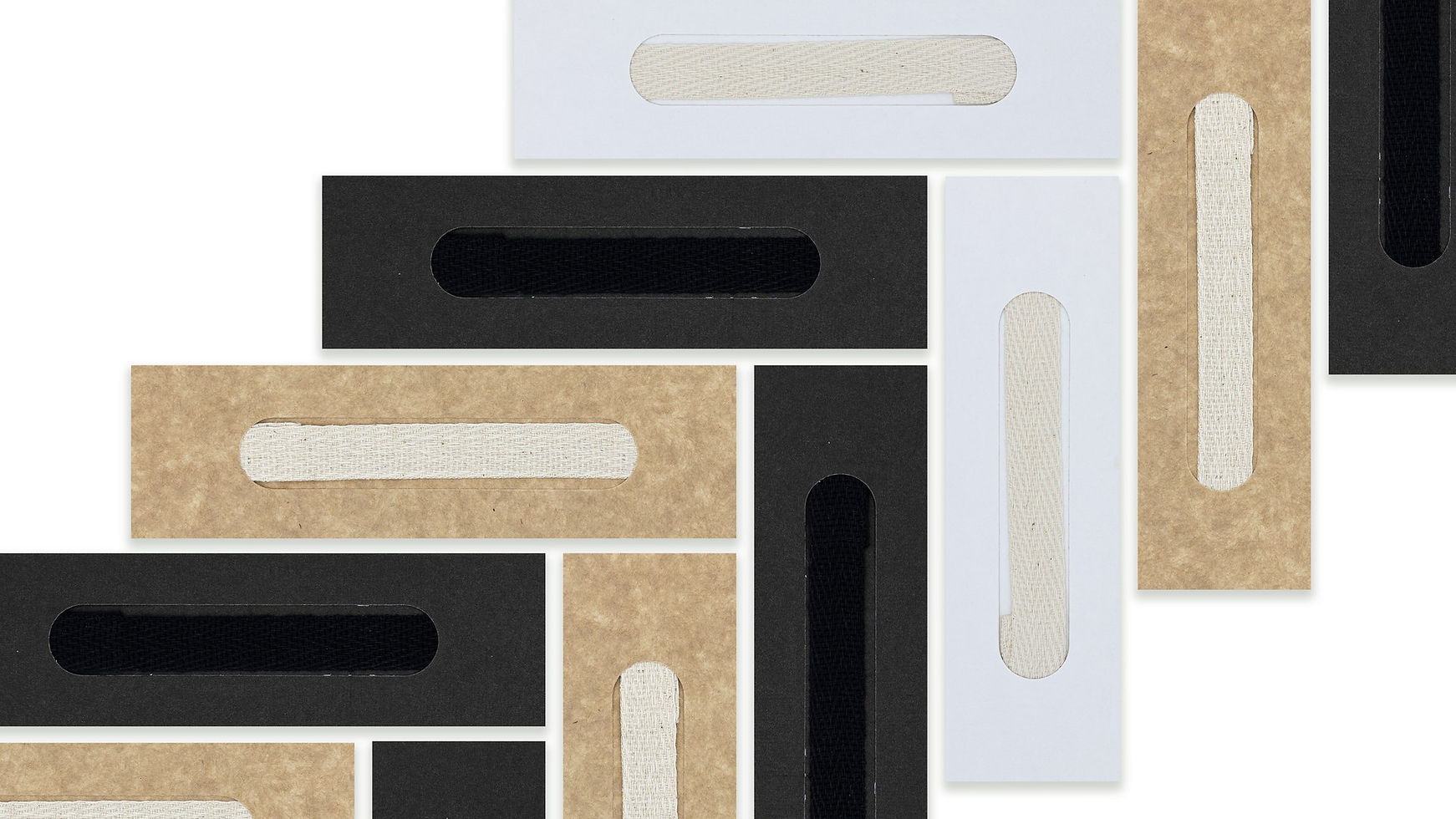
One component tells the whole story: the handle. On multipacks, beverage cases, e-commerce boxes, and gift packages, the handle is often the only non-paper element in an otherwise fully paper-based package.
The point isn't bans; it's simplicity. An all-paper package speaks for itself: a single material, a straightforward environmental declaration, and no explanations required. Every additional material introduces another question that customers will eventually ask.
This is a classic case where sustainability does not require a revolution, but attention to detail. Take stock of the "hidden" components in your packaging, such as handles, tapes, and windows, and ask whether a paper-based alternative with adequate performance exists for each of them. In the case of handles, the answer is yes.
The Paper Alternative: A Handle for Every Need
When replacing a component, the real question is not the material itself but the project's requirements. How much does the package weigh when full? How is it lifted? Which channel does it travel through? What type of grip is needed for the person carrying it?
These are the same questions you ask when designing a box, and the answer for handles is the same: there is a suitable product for every need.
From a technical perspective, the key is selecting the right material for the right use:
Paper for most applications.
Fabric where a more comfortable grip is required.
Reinforced paper for more demanding loads, from bottle multipacks to e-commerce boxes.
The choice among these options depends on the specific application. Once the requirement is clearly defined, verification should be carried out together with the supplier, on the actual package and under real operating conditions. That is the only number that really counts.
Meanwhile, production lines can continue operating at full speed: handles are applied automatically on existing folder-gluer lines at industrial speeds.
Recyclability and Certifications: What to Check
"Sustainable" is an adjective. Certifications are facts.
When evaluating a paper component for your packaging, three checks protect you from nasty surprises (and from unintentional greenwashing):
Compatibility with the paper recycling stream
The fewer different materials involved, the simpler and more efficient the end-of-life recycling process becomes.
Supply chain certification
For paper products, FSC Chain of Custody certification guarantees the responsible origin of the raw material. Do not stop at the logo: ask for the certificate itself, including its number, issuing body, and expiration date.
Supplier process quality
A valid ISO 9001 certification shows that quality is systematic, not accidental.
You can put the same questions to us. BrianPack works with a certified paper supply chain and certified process quality.
Where to Start: Five Questions
The plastic-to-paper transition in your packaging can start this week, with five simple questions:
Which components of my packaging are not made of paper?
For each one, is there a paper-based alternative that's up to the job?
Have I defined the real requirements of my format (weight, handling, channel) together with my supplier?
Does the supplier have verifiable certifications (FSC, ISO 9001)?
Which product can I start with?
To go deeper, we've prepared an actionable 10-point checklist on sustainable handles.
If you'd rather talk it over in person, we're right here, in Lissone, since 1988. Tell us about your packaging and we'll show you, on your own format and not in the abstract, how to make it more sustainable without stopping production.
BrianPack S.r.l. designs and manufactures handles for solid and corrugated cardboard boxes, along with the equipment to apply them. Certified paper supply chain and certified process quality.


